


Page 35 - Coespu 2020-1
P. 35
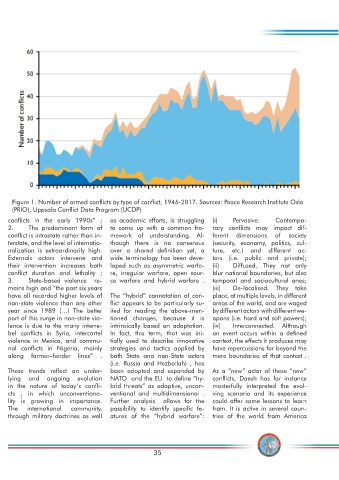
Figure 1. Number of armed conflicts by type of conflict, 1946-2017. Sources: Peace Research Institute Oslo
     (PRIO), Uppsala Conflict Data Program (UCDP)
    conflicts  in  the  early  1990s”  ;  as academic efforts, is struggling  (i)   Pervasive.    Contempo-
    2.     The  predominant  form  of  to come up with a common fra-        rary  conflicts  may  impact  dif-
    conflict is intrastate rather than in-  mework  of  understanding.  Al-  ferent  dimensions   of  society
    terstate, and the level of internatio-  though  there is no consensus  (security,  economy,  politics,  cul-
    nalization  is  extraordinarily  high.  over  a  shared  definition  yet,  a  ture,  etc.)  and  different  ac-
    Externals actors intervene and  wide terminology has been deve-         tors  (i.e.  public  and  private);
    their intervention increases both  loped such as asymmetric  warfa-     (ii)   Diffused.  They  not  only
    conflict  duration  and  lethality  ;  re, irregular warfare, open sour-  blur national boundaries, but also
    3.     State-based  violence    re-  ce  warfare  and  hybrid  warfare  .  temporal and sociocultural ones;
    mains high and “the past six years                                      (iii)   De-localised.  They  take
    have all recorded higher levels of  The “hybrid” connotation of con-    place, at multiple levels, in different
    non-state violence than any other  flict appears to be particularly su-  areas of the world, and are waged
    year  since  1989  (…)  The  better  ited for reading the above-men-    by different actors  with different we-
    part of this surge in non-state vio-  tioned changes,  because it is  apons (i.e. hard and soft powers);
    lence is due  to  the many interre-  intrinsically  based  on  adaptation.  (iv)   Interconnected.  Although
    bel  conflicts  in  Syria,  intercartel  In  fact,  this term, that  was ini-  an  event  occurs  within  a  defined
    violence  in Mexico, and  commu-    tially used to describe  innovative  context, the effects it produces may
    nal  conflicts  in  Nigeria,  mainly  strategies and tactics applied by  have repercussions far beyond the
    along  farmer–herder  lines”  .     both State and non-State actors  mere boundaries of that context .
                                        (i.e.  Russia  and  Hezbollah)  ,  has
    These  trends  reflect  an  under-  been adopted and expanded by  As a “new” actor of these “new”
    lying and  ongoing  evolution  NATO  and the EU  to define “hy-         conflicts,  Daesh  has  for  instance
    in  the  nature  of  today’s  confli-  brid  threats” as adaptive,  uncon-  masterfully interpreted the evol-
    cts , in which unconventiona-       ventional  and  multidimensional  .  ving scenario and  its experience
    lity  is  growing  in  importance.  Further analysis   allows for the  could offer some lessons to learn
    The    international  community,    possibility  to  identify  specific  fe-  from.  It  is  active  in  several  coun-
    through military doctrines  as well  atures of the “hybrid warfare”:    tries of the world from America


                                                       35

